
Simply put: engine coolant prevents your vehicle from overheating. It is a critical element of your vehicle that must be maintained and replaced properly.
A professional should flush your coolant system if you haven’t changed your coolant in a while, but if you keep up with it regularly, changing your own coolant can save you money.
Though replacing the fluid is usually quite simple, it is not a beginner’s project. The rules below also apply solely to modern cars. You must know when to replace your engine coolant, how to check the coolant, and how to change the coolant.
When to replace engine coolant
The ‘when’ to replace your coolant varies greatly. Your car manufacturer may have recommendations for when you should replace your coolant, but it still can depend on factors like heat, or even how often your car is towed. Even coolant marketed as long-lasting should be checked.
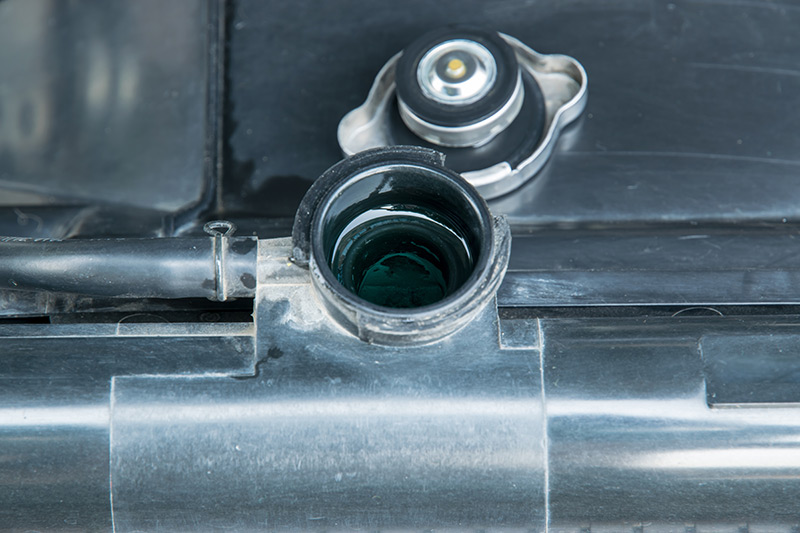
Generally, you should replace your coolant every 2-3 years, or every 30,000 miles. It should be checked at minimum twice yearly, before major weather changes – particularly summer and winter. Still, it should be simple enough to check whenever you put your hood up.
Most people associate anti-freeze with winter, but it can be mixed year-round with regular coolant to stop corrosion and scale build-up. Using the wrong anti-freeze with your coolant can be unsafe if they do not mix well. Use your vehicle manual to help determine what type of anti-freeze you should use if you decide to include it.
How to check engine coolant
Look for your expansion tank and find the coolant filler cap using your vehicle manual. This is strongly recommended as pouring engine coolant or anti-freeze into the screen wash or brake fluid reservoir by accident will damage your vehicle. Don’t remove the coolant filler cap when the vehicle is turned on or is hot. You risk being sprayed with pressurized hot water.
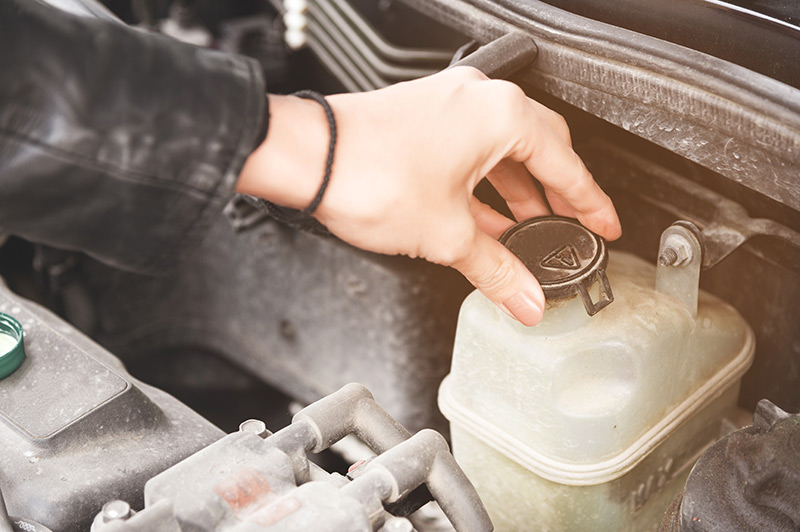
The coolant should be at the appropriate level – no less than the minimum mark on your expansion tank, and no more than the maximum. Anything less than minimum puts you at risk of your vehicle overheating. It is abnormal for your coolant level to drop, so seek an automobile professional if this has happened.
Keep in mind that you cannot replace the coolant in your cooling system with a different type. It must match the type found in your vehicle manual. Using the wrong engine coolant can cause parts damage and void your warranty.
How to replace engine coolant
If you see any rust, oil or orange crud once you open the coolant cap, seek an automobile professional. This is not an issue you can fix on your own. In addition, check your owner’s manual before you begin – it has instructions on parts specific to your vehicle.
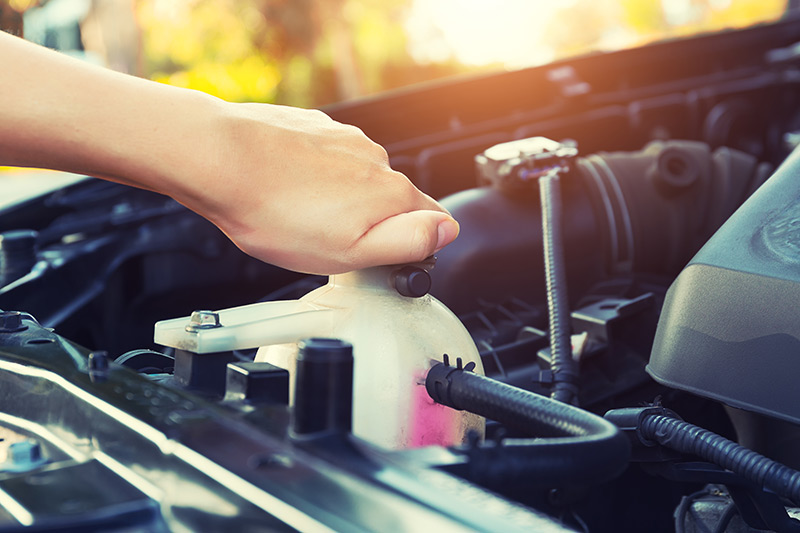
If the coolant is clean, use a vehicle jack suitable for the weight of your car to prop the car up, with jack stands for safety. Other tools you will need include:
- Two gallons of new coolant, to replace to used coolant
- A bucket, to catch the used coolant
- A Phillips screwdriver, to remove the screw beneath the radiator
Climb beneath your vehicle once it is secured and place the bucket beneath the expansion tank reservoir screw to catch the liquid. As you loosen the screw (it’s best not to remove it entirely), the reservoir will drain. Let it drain until the old coolant is gone, and then tighten the screw back to its original position without overtightening it.
Find the expansion tank and remove the coolant cap. The coolant should be mixed with water, according to the instructions on your coolant bottle. The reservoir should be filled about halfway with this mixture, but your vehicle manual is paramount in finding the exact amount. Once finished, carefully close the cap and lower the vehicle from the jack.
It’s important to clean up after replacing your coolant. Used coolant is poisonous – it’s especially deadly to pets, even in small amounts. Use a rag to immediately clean up spilt used coolant and dispose of the rest of it at a recycling center.
Leave a Reply